
Nepal disaster a climate warning for COP31
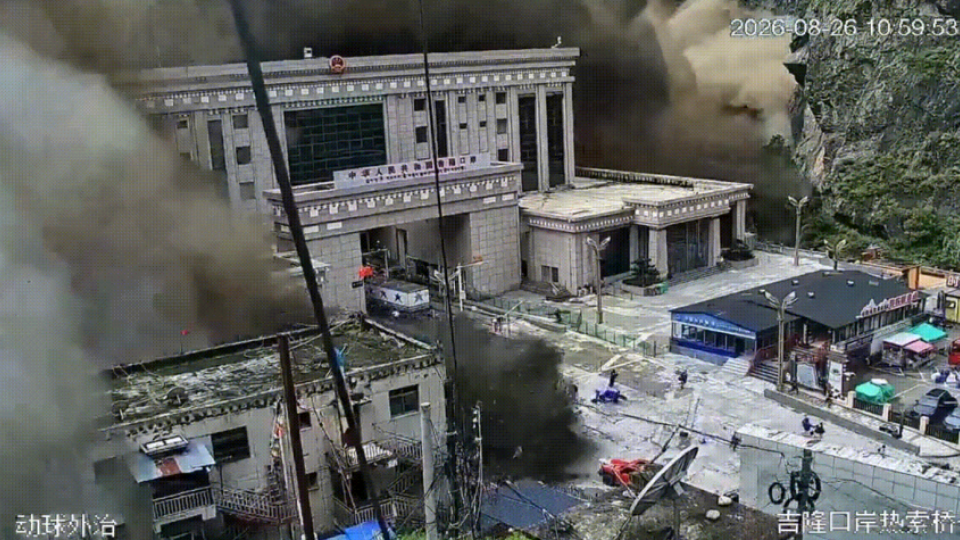
The disaster in Nepal, Tibet and China has been described as being like a “horror movie” — even by those in the midst of the catastrophe.
Just as the wildfires in Europe and the Black Summer bushfires in Australia, it is hard to imagine just how catastrophic these climate-fuelled events can be — until they happen — and even then, it is hard to get one’s head around.
But climate scientists have warned for decades that in an increasingly warming world — the result of human-induced activity — catastrophic events are hard to predict but they will happen.
Scientists have also warned for decades that tipping points — critical limits in the Earthʼs climate and planetary sub-systems (rainforests and ice sheets) where small additional changes can trigger major and potentially irreversible shifts that continue on their own — will be more frequent.
They have also pointed out the injustice associated with these disasters: countries that had the least to do with the problem are the worst affected. This is what we are seeing in Nepal.
The climate emergency — seen today in fires across Europe, the melting glaciers in the Himalayas and the developing El Niño in the Southern Ocean — is not new. But it is getting worse. Just as shocking as the catastrophic events themselves, is that those in power refuse to do anything to avert it.
This is where we need more focus. Once, the Australian prime minister Anthony Albanese told us that the climate emergency was the “greatest moral issue of our time”. Now, asked by reporters if the world has to take some collective responsibility for not doing enough on climate change, he said that “now’s the time … to focus … very much on people who are incredibly traumatised”.
The most useful way Australia could reassure people who are traumatised is by taking a proactive approach to this global problem, to which this country, a major coal and gas exporter, makes a significant contribution.
Albanese and several other ministers in Palau for the Pacific Islands Forum last week were keen to play down climate in favour of “security”, including the Pacific Policing initiative, which involves Australia training new recruits to counter “transnational crime”. But the climate crisis is the most serious transnational crime of them all.
Even Palauan President Surangel Whipps, not renown for being outspoken on climate, said: “It is hard to overstate the depth of emotion for those of us living on the frontline after having fought so hard to put the 1.5 degree limit at the heart of the Paris Agreement … calls for greater ambition are no longer enough — we need to see an urgent and unprecedented increase in political will and investment in a climate safe future.”
A United Nations Environment Program report, released in September, warns that global temperature rise is set to cross 1.5°C above pre-industrial levels by 2030. “There are no good outcomes in remaining above 1.5°C,” it said.
It said “potential tipping points” include irreversible changes to ice sheets, the Atlantic Meridional Overturning Circulation (the system of ocean currents that acts as a global conveyor belt carrying warm surface water north and cold deep water south) and the erasure of the Amazon rainforest. All these would lead to intensified extreme weather, ecosystem loss and submersion of small island states and low-lying coastal cities.
It said warming up to or less than 3°C would mean glaciers could lose more than a quarter of their mass by 2100 and sea levels would rise by 12.5 centimetres. Apart from severe damage to human health, food security, water supplies, nature, cities, infrastructure and economies, it would mean “crossing thresholds that become difficult or impossible to reverse on human timescales”.
There is debate among climate scientists, some of whom say the UN is underplaying the scale of the global warming disaster. Climate Brink said: “Most forecasts predict that 2027 will set records, with the global average temperature reaching levels we would not expect until the late 2030s”.
The Nepal disaster is a reminder that climate change is the greatest security threat of our time. Burning of fossil fuels, which leads to more trapped greenhouse gases, continues to contribute to the accumulation of energy in the Earth system that, in turn, leads to uninhabitable temperatures.
Australia, a co-host of the COP31 in Türkiye, will argue that it is on track to reach its 2030 target of cutting emissions by 43% below 2005 levels and to reach net-zero by 2050.
But this data hides a multitude of contradictions — not the least being that Australia is significantly expanding its coal and gas exports because the Paris Agreement does not factor those exported emissions into its calculations of country targets.
Labor must be forced to break its alliance with fossil fuel corporations, but the challenge is huge.
Already, energy minister Chris Bowen is lowering expectations, telling The Australian recently that this year’s COP31 summit will not provide “massive breakthroughs” on global climate action. He said the “quiet majority” are already buying electric cars, installing home batteries and he will “not be using his role to facilitate an agreement for curtailing coal or gas exports”.
This is despite predictions that the super El Niño will affect the world. Scientists were shocked in 2024 when global average warming exceeded 1.5°C, but now they are estimating 2027 could be about 1.7°C and may reach 2°C in a single month next year.
Bipartisan support for Australia to increase its fossil fuel exports and Labor’s refusal to challenge the Coalition or One Nation on their climate denialism means the onus is on ordinary people to challenge the establishment parties.
It cannot be done through electoral means alone. With public support still showing 49% want serious action on global warming, we need to get organised.
[Pip Hinman is a member of the Socialist Alliance national executive.]