
Federal budget tweaks to housing won’t deliver housing justice
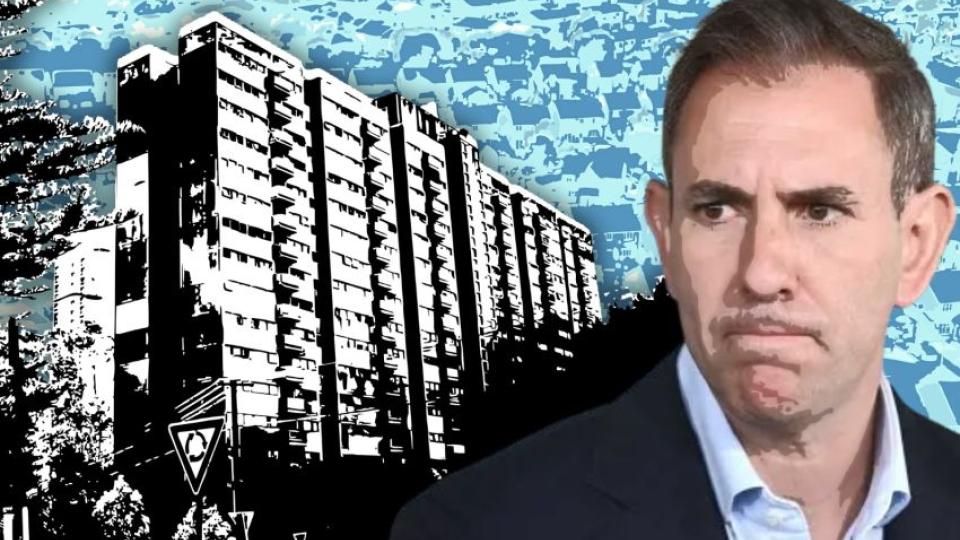
The federal Labor government’s budget on May 12 outlined some small housing tax changes.
But will it alleviate the homelessness crisis, reduce the national waiting list for public housing, cap astronomical rents and give the 750,000 people living in housing stress genuine relief?
No, it won’t. It trimmed back a fraction of the negative gearing and capital gains tax concessions, worth a staggering $29 billion a year to the public purse. But Treasurer Jim Chalmers described it as the “largest and most comprehensive housing plan Australia has seen in generations”.
Labor argues it will make inroads into intergenerational wealth inequality and help young people jump on to the property ladder. However, the details show the investor class will not take much of a hit.
Negative gearing concessions mean landlords can claim significant costs of their residential investment against tax due on their other income — a public subsidy for expanding their property portfolios.
Liberal PM John Howard introduced the 50% capital gains tax discount in 1999. It meant that, after 12 months, investors who sell investment properties and make a considerable gain and only pay half that capital gain in tax.
The latest budget replaces the 50% capital gains tax discount with an inflation-adjusted indexation measure with a 30% tax on gains from July 1, 2027.
Investors will only be able to claim negative gearing concessions on new builds. But they can still claim it on properties they held before May 12 and, after that date, only on newly built properties.
With encouragement from these tax perks for the rich, median national house prices over the last 26 years have risen by between 400–560%.
From July 2027, mean that investors will be taxed on real capital gains, that is, with inflation taken into account.
The Australia Institute argues that Labor’s changes will help young people buy a home. The budget estimates that 75,000 additional people will be helped to become home owners over the next decade. However, for 30% of the population who rent and for the 918,000 people considered “extremely at risk” of defaulting on their mortgage, these capital gains changes are meaningless. This is because rents and house prices will still rise, according to the Commonwealth Bank and Treasury estimates.
Just in budget week, a homeless First Nations mother lost one of her twins on the banks of the Murrumbidgee River in NSW. She was living in an encampment, 15 minutes’ walk from the nearest public toilets or running water.
In the same week Aboriginal mother Mary Anne Miller died from sepsis in Western Australia after being thrown out of her public housing.
Homelessness in an advanced, wealthy country (for some) is particularly hard to swallow when there are 1 million homes empty.
Property investors, including Airbnb merchants, are not compelled to house people, or pay a tax to help house others if their investments lie empty.
Liberal Party Opposition Leader Angus Taylor is putting a dog-whistle spin on Labor’s refrain about the housing crisis being all about supply. His racist fear-mongering is deliberate, as the Pauline Hanson One Nation Party rises in the polls. His latest policy proposal is to solve the housing crisis by coupling migration to new builds.
TAI data, however, shows that “population growth” has had little impact on house prices. Over the past 10 years the number of new dwellings has “significantly” outpaced population growth.
Labor is way behind on its 2023 Housing Australia Future Fund (HAFF) target of 20,000 new social homes by 2029 and 20,000 affordable homes. Only 18,650 social and affordable homes have been built or been acquired.
A Greens-initiated Senate inquiry on intergenerational housing inequity has revealed that 640,000 people need social housing.
Even if Labor manages to deliver on its 40,000 promised social and affordable houses, it will only be 6% of what is needed.
To solve the housing crisis, we need to make housing a human right. Vienna houses almost 60% of its population in beautiful public housing.
It can be done here too.
Meanwhile, socially and environmentally irresponsible public housing demolitions must stop. Dilapidated estates and homes can be renovated for a fraction of the price and, importantly, maintain public housing. The Office architects have even drawn up alternative plans for the estates slated for demolition in Victoria and NSW.
Socialist Alliance (SA) says quality public housing can be made, rents can be capped and landlords, after a set period, can be obliged to fill empty dwellings.
But this can only be done if the grassroots campaigns become stronger.
SA members are active in the push to save the 44 housing towers in Naarm/Melbourne, which has just won another reprieve from the High Court. We are also trying to stop Waterloo public housing from being demolished and privatised. NSW Homes are threatening to send demolition teams at the end of May.
Join the housing justice movement and SA to help us win a housing policy that puts people and the ecology before profit.
[Rachel Evans is a member of the Socialist Alliance National Executive. Evans is the SA candidate in Heffron for the March 2027 NSW election.]